

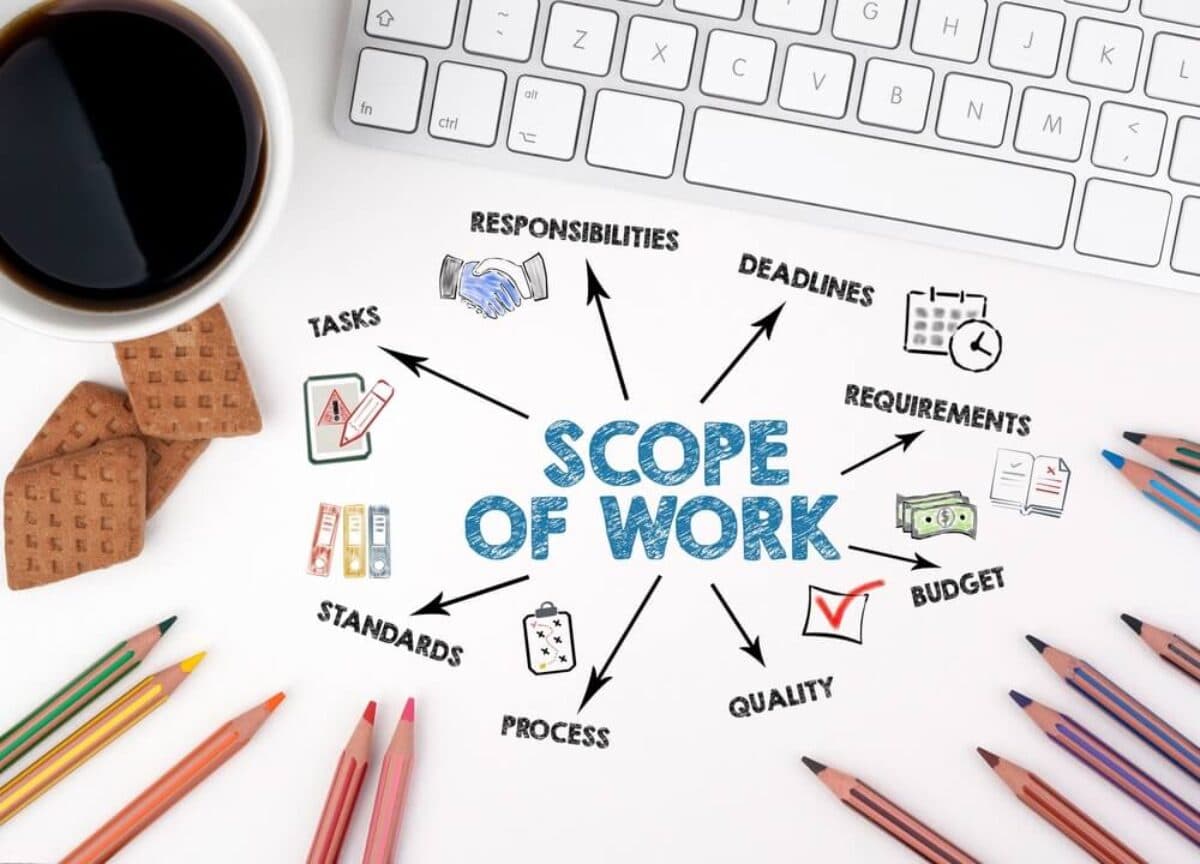
A clearer scope makes better software
How turning a vague product idea into a focused first version can make development faster, clearer, and easier to maintain.
Most software projects do not become complicated because developers cannot write the code. They become complicated because the product keeps changing while the code is already being written. A simple idea gradually turns into dashboards, roles, notifications, analytics, integrations, settings, and dozens of edge cases.
A clearer scope does not mean removing ambition. It means deciding what deserves attention now and what can wait until the product has enough real usage to justify it.
Start with the actual problem
Before selecting a framework, database, or UI library, define the problem in one sentence. If the sentence is difficult to write, the product probably needs more thinking before it needs more code.
Define the smallest useful outcome
- Identify the primary user.
- Identify the situation in which they use the product.
- Define the single outcome they need.
- List only the functionality required to reach that outcome.
- Move everything else into a future ideas list.
Features should answer a question
Every feature should have a reason to exist. Instead of asking whether something would be nice to have, ask what user problem it solves and what would happen if it did not exist.
- Does it solve the primary problem?
- Will users interact with it frequently?
- Does it reduce friction?
- Is it necessary for another core feature?
- Can it safely be added later?
The goal of an MVP is not to build less software. It is to learn with less unnecessary software.
Let the first version teach you
A strong first release gives you information. You learn which screens people actually use, where they get confused, which features they ignore, and which workflows deserve deeper investment.
FAQ
Should every project start with an MVP?
Not necessarily. The right approach depends on the product, risk, budget, and users. But defining a focused first milestone is useful for almost every software project.
How do I know if my scope is too large?
If the first release requires many unrelated screens, multiple complex integrations, several user roles, and extensive automation before anyone can use the core workflow, the scope is probably too broad.
Should technical planning happen before product planning?
They should influence each other, but the user problem should generally be understood before committing to a technical architecture.